
Your trees are living investments that shape your property’s value, energy efficiency, and outdoor comfort for decades. Yet many Huntington Beach property owners struggle to balance professional tree care with thoughtful landscape design, often treating these as separate concerns rather than complementary elements of a thriving outdoor space.
From planning a complete drought-tolerant landscape transformation to maintaining the mature trees already on your property, success comes down to understanding how smart tree selection, proper planting techniques, and ongoing care work together to create outdoor spaces that thrive in Southern California’s coastal climate.
At Growscapes, we specialize in sustainable, water-efficient landscape design throughout Orange County. Since 2015, we’ve helped homeowners and businesses transform their outdoor spaces with eco-friendly solutions that balance beauty, functionality, and California’s water conservation needs.
Read on to discover how the right approach combines expert knowledge of tree health with sustainable design principles that work for your property’s specific conditions, and learn when to contact our team at Growscapes for help transforming your Huntington Beach property.
Trees and Landscape Design: Getting It Right
Why Trees Are Important to a Landscape
Trees function as the architectural backbone of any landscape design, providing shade, wind protection, privacy screening, and habitat for local wildlife. A single mature tree removes approximately 48 pounds of carbon dioxide annually!
We evaluate mature size and canopy spread (25-50 feet for large shade trees), root system behavior (surface vs. deep roots), water requirements post-establishment, salt tolerance for coastal properties within 2 miles of the beach, and compatibility with surrounding plantings to prevent future conflicts with hardscaping or structures.
Picking the Right Trees for Your Property
Huntington Beach’s USDA Zone 10a climate (average minimum temperatures 30-35°F) supports diverse tree species, but the most successful landscapes feature drought-tolerant natives and Mediterranean varieties. California sycamore reaches 40-80 feet with distinctive mottled bark and provides dense summer shade, coast live oak develops slowly but lives 250+ years with minimal water once established, and Torrey pine tolerates sandy soils and salt spray while growing 30-60 feet tall.
We assess soil pH (Huntington Beach ranges 7.0-8.5 alkaline), sun exposure patterns, drainage rates (clay soils drain within 12-24 hours vs. 2-4 hours for sandy soils), and existing irrigation capacity before recommending species.
Your landscape design consultation with our team should include soil testing and site analysis to match tree selections with your property’s specific growing conditions.
Getting Trees Off to a Strong Start
How We Plant Trees the Right Way
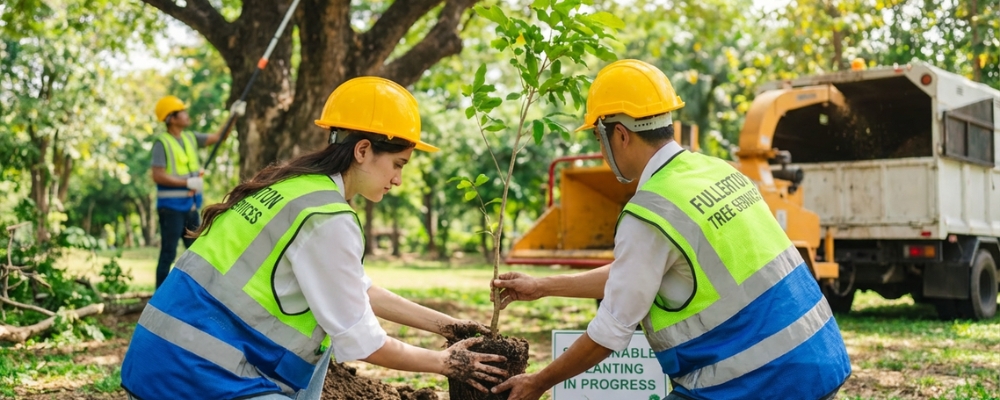
At Growscapes, we follow research-proven planting methods that differ significantly from traditional approaches. We’ve seen firsthand how planting depth affects long-term survival, which is why we never plant trees too deep. Trees planted even a few inches below proper grade suffer from oxygen-deprived roots, leading to increased mortality rates within 3-5 years.
Our crews dig planting holes 2-3 times wider than the root ball, but only as deep as the root mass from bottom to flare. This technique encourages lateral root growth into your native soil rather than circling within amended areas, setting trees up for decades of healthy growth.
How We Set Up Irrigation for Success
New trees need consistent moisture for 1-2 growing seasons to establish a healthy root system that extends beyond the original root ball. That’s why we set up irrigation systems that work with the tree and surrounding landscaping.
Our irrigation schedules promote deep root growth. Deep, infrequent watering encourages roots to grow deeper compared to daily shallow watering. We typically program systems to deliver a steady supply of water over a long time to allow soil penetration rather than runoff.
We also recommend adjusting watering frequency based on Huntington Beach’s seasonal patterns, ensuring that your tree neither drowns nor fries.
Keeping Your Trees Healthy Long-Term
Mulch Matters More Than You Think
Proper mulching regulates soil temperature, retains moisture by reducing evaporation, suppresses weed growth by blocking sunlight to weed seeds, and adds organic matter as it decomposes contributing nitrogen and beneficial microorganisms.
At Growscapes, we recommend applying 2-4 inches of organic mulch in a ring extending from 6 inches away from trunks to the drip line (outermost reach of branches).
Replenish mulch annually each spring as the previous layer decomposes, adding just enough to restore 3-4 inch total depth. Avoid volcano mulching (piling mulch high against trunks), which traps moisture promoting fungal decay, attracts bark-boring insects, and hides the critical root flare.
For Huntington Beach coastal properties within 2 miles of the beach, select mulches tested for salt tolerance including shredded redwood bark or composted eucalyptus, avoiding pine products that acidify already-alkaline soils with pH above 7.5.
Knowing When to Call in the Pros
At Growscapes, we handle tree selection, planting, irrigation integration, and routine maintenance, but certified arborists specialize in tree health diagnostics, structural risk assessment, and therapeutic interventions beyond basic care.
Call an ISA-certified arborist when trees show decline symptoms including leaves yellowing outside normal fall timing, dead branches exceeding 15% of total canopy, bark peeling or cracking in unusual patterns, or growth rates dropping below the species’ typical inches per year.
Arborists provide essential services including detailed tree risk assessments using standardized evaluation methods, pest and disease identification with lab testing when needed, prescription treatments for insects like bark beetles or diseases like anthracnose, and structural support systems (cabling and bracing) for trees with weak branch unions or splitting trunks.
They also offer construction impact assessments and root zone protection plans when building projects occur within 15 feet of mature trees, preservation strategies that save your trees. For routine landscape needs like design, planting, and maintenance, contact our team as we integrate trees into comprehensive outdoor space planning.
What You Can Handle Yourself
Checking Your Trees for Problems
Regular tree inspections catch problems before they become expensive emergencies, with early detection reducing treatment costs by 60-80% compared to advanced disease stages. Consider walking your property on the 1st of each month, photographing trees from the same angle to track subtle changes in canopy density, leaf color progression, and growth patterns over time.
Document Huntington Beach’s typical leaf-out timing (February-March for deciduous trees) and fall color changes (October-November) because deviations of 2+ weeks signal potential problems requiring professional evaluation.
Easy Maintenance You Can Do
Homeowners can handle several tree care tasks that support landscape health without specialized equipment, such as clearing accumulated leaves, debris, and weeds from 3-foot radius around trunks monthly to improve air circulation and reduce fungal disease risk.
Young trees often develop stake ties that constrict trunks as diameter grows, requiring quarterly adjustment or removal once roots anchor adequately. Remove basal suckers (shoots growing from roots or trunk base) when they’re 2-4 inches long by rubbing them off with your thumb rather than cutting, which stimulates more growth.
When seed pods or spent flowers accumulate under ornamental trees, remove them promptly to prevent attracting pests and reduce disease vectors. Monitor irrigation emitters monthly to ensure they haven’t shifted position or become clogged, maintaining proper water delivery to expanding root zones.
Contact our team for guidance on species-specific care intervals, as palms require different techniques than deciduous or evergreen trees.
How We’ve Helped Local Properties
Orange County Backyard Makeover
One of our clients in Orange County needed comprehensive landscape renovation including irrigation system upgrades and new tree installations. The project involved relocating irrigation valves underground, converting portions to water-efficient drip systems, adding low-voltage landscape lighting, and planting two trees along with flowering plants throughout the property.
The completed landscape featured strategic tree placement that provided shade without overwhelming the space, integrated with drought-tolerant plantings and efficient irrigation. The transformation significantly improved curb appeal while establishing a sustainable, low-maintenance outdoor environment.
Read the complete client testimonial on our website and view our project portfolio to see additional landscape installation examples throughout Orange County.
Office Building Front Yard Refresh
A commercial property client contacted us with limited budget constraints for landscaping an office building front area. Our design team recommended plant selections and layout concepts that fit within budget parameters while providing professional appearance and low maintenance requirements.
The project demonstrated how thoughtful plant and tree selection creates attractive commercial landscapes without excessive water use or ongoing maintenance costs. Completed within one week from initial consultation to installation, the project balanced aesthetic goals with practical considerations including regional water restrictions and long-term sustainability.
View client testimonials to learn more about our commercial landscaping services available throughout Huntington Beach and Orange County.
Ready to Create Your Perfect Landscape?
Trees anchor successful landscape designs by providing structure, shade, and long-term value that mature over decades. Strategic tree placement can reduce energy costs, increase property values, and improve quality of life through shade, beauty, and environmental benefits proven to reduce stress and improve mental health outcomes.
Working with our experienced team at Growscapes ensures your trees receive appropriate selection for your specific microclimate, professional planting techniques that prevent early mortality, and integration with efficient irrigation systems that reduce water costs once established.
Ready to create a landscape that showcases healthy, properly placed trees? Contact us at (949) 929-6198 or email info@GrowscapesOC.com to schedule a consultation.
Common Questions About Trees and Landscaping
How do I know if a tree is suitable for my Huntington Beach property?
Consider your property’s microclimate including salt exposure, wind patterns, and soil type, with coastal properties requiring salt-tolerant species. Evaluate mature size against available space. Native and Mediterranean species adapted to low water availability perform best in Southern California landscapes.
Can I plant trees near existing hardscaping or patios?
Tree placement near hardscaping requires careful species selection with non-invasive root systems and appropriate mature sizes, maintaining minimum 8-10 foot distances between large trees and concrete features. Consider using root barriers during installation to direct growth away from structures.
What tree problems require immediate professional attention?
Contact professionals immediately for sudden lean or tilting, large cracks in trunks or major branches, extensive dead branches throughout the canopy, or rapid leaf color changes. Fungal growth at tree bases, severe pest infestations, or significant storm damage also warrant urgent evaluation.
These symptoms indicate structural instability or health decline that could result in property damage or tree loss without prompt intervention from qualified arborists.
How do drought-tolerant trees fit into water-wise landscapes?
Drought-tolerant trees form the structural foundation of water-wise Huntington Beach landscapes, and once established (1-2 years), these species thrive on minimal supplemental irrigation, dramatically reducing long-term water costs. Native California species and Mediterranean varieties evolved to handle dry summers and seasonal rainfall patterns.